

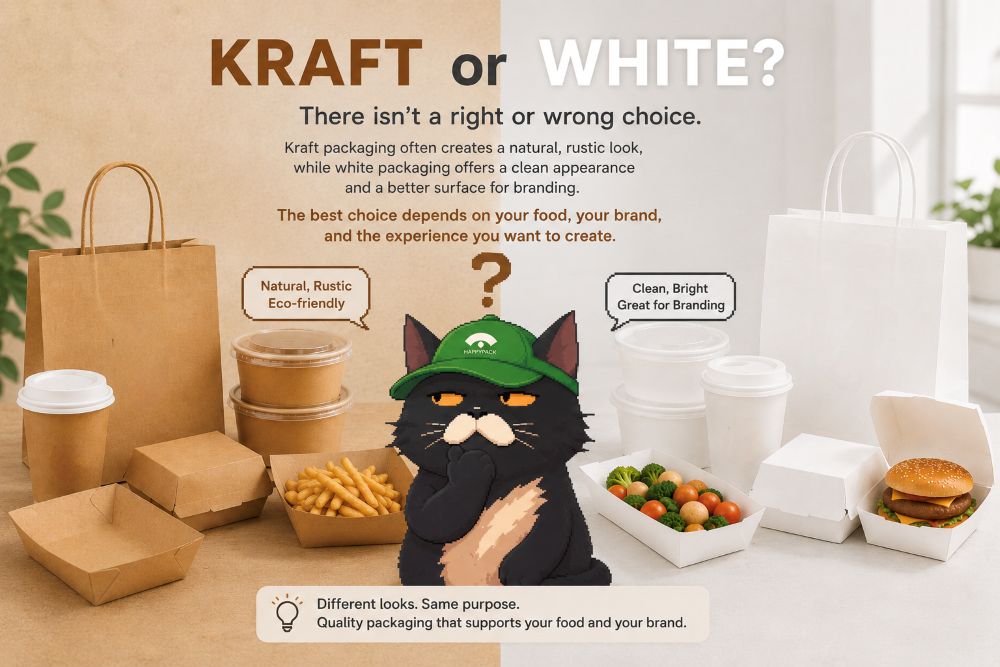
When choosing between kraft and white paper packaging, there is no universal answer. The right choice depends on the type of food, brand positioning, and the experience you want to create.
Kraft Packaging: Natural Appearance with Practical Performance
Kraft packaging is often selected for casual takeaway foods because of its natural appearance and practical performance. It is commonly used for burger boxes, food trays, salad bowls, noodle boxes, and takeaway paper bags, where durability and a rustic presentation are both valued.
It is also frequently associated with handcrafted products, organic foods, and environmentally conscious brands. Many cafés, street food vendors, and takeaway restaurants prefer kraft packaging because it creates a warm, authentic presentation that complements their brand image.
White Packaging: Clean Presentation and Strong Branding
White paperboard provides a clean appearance and an excellent surface for high-quality printing. Its smooth finish allows colors, logos, and product graphics to stand out more clearly.
It is widely used for sandwich boxes, pastry boxes, cake boxes, and premium takeaway packaging, where visual presentation plays an important role in the customer experience. White packaging is also commonly chosen by brands seeking a cleaner, brighter, or more premium presentation.
Beyond Color: Performance Matters Too
Color is only one part of the decision.
Experienced buyers also consider paper quality, structural strength, coating options, grease resistance, and the intended food application. In many cases, the same packaging design can be produced in either kraft or white paperboard, depending on branding requirements, product positioning, and functional needs.
Manufacturer's Insight
At Happypack, we manufacture both kraft and white paper packaging, including paper cups, paper bowls, burger boxes, food trays, takeaway boxes, and paper bags.
Rather than recommending one material for every application, we work with customers to match packaging solutions to different food categories, branding goals, and market requirements. The right packaging is not simply about appearance—it should also support product performance and the overall brand experience.
Conclusion
There is no "better" packaging color—only the one that best fits your food and your brand.
By considering product type, customer expectations, branding, and packaging performance together, businesses can make packaging decisions that strengthen both product presentation and brand identity.
Author
Neil Nie | Business Development | Happypack
Email: neil@nbhappypack.com